
Artificial Intelligence (AI) has quietly integrated into our daily lives, from smart devices to recommendation systems. This post aims to demystify AI for beginners, explaining its fundamental concepts, applications, and future directions.
What is AI?
AI refers to the ability of machines to perform tasks that typically require human intelligence. These tasks include learning, reasoning, problem-solving, understanding natural language, and perceiving the environment. At the core of many AI systems are artificial neural networks, designed to mimic how the human brain processes information. Its a strange, synthetic intelligence based on our own organic ways of thinking.
AI exists primarily as code, implemented through various programming languages and frameworks. Companies like OpenAI develop and deploy AI models using extensive computational resources and sophisticated algorithms. These models are then accessed through APIs, enabling other developers to integrate AI capabilities into their applications.

Levels of "Consciousness"
AI exists at various levels of complexity, from basic machine learning algorithms to the theoretical concept of sentient systems.
Learning (ML): This is the most common form of AI, where algorithms learn from data to make predictions or decisions without being explicitly programmed for specific tasks. Examples include spam filters that sort your emails, recommendation engines like those on Netflix and Amazon, and fraud detection systems used by banks.
Deep Learning (DL): A subset of ML, deep learning uses neural networks with many layers (hence “deep”) to analyze complex patterns in data. It’s the technology behind advanced image and speech recognition systems, such as facial recognition on Facebook, voice assistants like Siri and Alexa, and self-driving car technology developed by companies like Tesla. Convolutional Neural Networks (CNNs), a specific type of deep learning model, are particularly effective for image and video recognition tasks. CNNs use convolutional layers to detect patterns in data, pooling layers to reduce dimensionality, and fully connected layers to make final predictions.
Artificial General Intelligence (AGI): This refers to highly autonomous systems that can outperform humans at most economically valuable work. AGI remains a theoretical concept and has not yet been achieved. No current systems fall into this category, but it represents the ultimate aim of many AI researchers.
Artificial Superintelligence (ASI): This hypothetical AI surpasses human intelligence in all aspects, including creativity, problem-solving, and emotional intelligence. It represents the ultimate goal of AI research but is currently a subject of speculation and ethical debate. Examples from fiction include HAL 9000 from 2001: A Space Odyssey, Skynet from The Terminator series, Machines (and Agent Smith) from The Matrix, VIKI from I, Robot, and Ava from Ex Machina.
It’s important to note that some AI systems can fall into the Machine Learning (ML) and Deep Learning (DL) categories.
For example, virtual assistants like Siri and Alexa use machine learning algorithms to understand user preferences and deep learning models to process and understand spoken language.
ChatGPT utilises machine learning to generate responses based on patterns in the data it was trained on, and deep learning techniques enable it to understand and produce complex language patterns.
Neural Networks
The Evolution of Neural Networks
Nearly all modern AI tools, like ChatGPT, are based on a computational model of a living neuron developed in the 1960s. developed in the 1960s. This model, known as the perceptron, was the foundation of artificial neural networks. Developed by Frank Rosenblatt, the perceptron marked a significant step in AI by demonstrating a machine capable of learning and recognising patterns (Lefkowitz 2019). While early AI research faced several challenges and periods of stagnation, known as ‘AI winters,’ advancements in computing power, increased data availability, and new algorithms have pushed AI development forward.
The New Neuron Model:
The new model from the Center for Computational Neuroscience (CCN) treats neurons as tiny ‘controllers,’ capable of influencing their surroundings rather than passively passing information. This more realistic approach could lead to more powerful AI systems that better replicate the brain’s capabilities. The research, just published in the Proceedings of the National Academy of Sciences, highlights how our understanding of neurons has evolved and how this can improve AI (Moore et al. 2024).

Interacting with Strange Intelligence: Passive and Proactive Engagements
Passive Interactions:
Surveillance Cameras: AI-powered cameras already monitor public spaces, but these systems could become more sophisticated with more advanced neural networks. By understanding context better, they could better distinguish between different types of activities and reduce false alarms. For example, they might differentiate between a person running for exercise and fleeing a crime scene (Jones 2024).
Recommendation Systems: Platforms like Netflix or Amazon use AI to suggest content. Advanced neural networks could improve these recommendations by understanding not just past behavior but also users’ nuanced preferences and changing moods, providing more personalised and accurate suggestions (McKinsey Global Institute 2018).
Smart Devices: Many household devices use AI to optimise their functions. Enhanced neural networks could make these devices smarter and more intuitive. For instance, a smart thermostat might learn to predict your preferred room temperature based on your activities and even weather changes, adjusting settings automatically for comfort and energy efficiency (Taherdoost 2023).
Proactive Interactions:
Virtual Assistants: Tools like Siri, Alexa, and Google Assistant could become more conversational and context-aware, understanding complex commands and following more intricate sequences of tasks. For example, you might ask your assistant to plan your day, and it could automatically schedule meetings, book appointments, and even predict when you need reminders based on your habits (MLCommons 2023).
Content Creation: AI platforms like OpenAI’s tools assist in writing articles, creating art, or generating strategic documents. With advanced neural networks, these tools could produce even higher-quality outputs, understanding subtle nuances in language and style, and providing more creative and contextually appropriate content (McKinsey Global Institute 2018).
Health Apps: AI-driven applications provide insights into our health metrics. Improved neural networks could enable these apps to offer more precise and personalised health advice, detect early signs of medical conditions, and provide real-time feedback during workouts, dynamically adapting to your physical responses (Jones 2024).
The Future of AI: Bridging the Gap Between Intelligences
Advancements in understanding neurons suggest a future where AI systems can be more efficient and accurate. Adopting these new neuron models could overcome AI’s current limitations, such as providing incorrect answers or requiring significant energy for training. AI could become more reliable and less resource-intensive by better mimicking the brain’s control mechanisms.
That means it will be even more important to develop critical thinking, media literacy, ethical frameworks and tech savvy skills to keep on top of it. (See our blog on AI literacy)
Implications of the New Model:
Enhanced AI Performance: More accurate models of neural processing could lead to AI that understands and interacts with the world more like humans do. For instance, search engines could understand the context of queries more deeply, providing more accurate and relevant results (Jones 2024).
Energy Efficiency: Understanding the brain’s energy-efficient mechanisms can inspire more sustainable AI technologies. AI systems could perform complex tasks with less computational power, reducing energy consumption and costs (McKinsey Global Institute 2018).
Better Decision-Making: With improved models, AI could make more nuanced and context-aware decisions. “For example, financial algorithms could make better predictions about the stock market by understanding how different economic factors are related to each other (Taherdoost 2023)

Conclusion
AI for beginners means understanding its background, levels, and how its role is expanding, from the passive surveillance systems that keep us safe to the proactive tools that enhance our productivity.
It also means knowing how developments like new insights into neural models can impact us personally.
The future of AI looks promising. It aims to bridge the gap between different intelligences, making technology smarter, more efficient, and more aligned with how we naturally interact with the world.
As AI seeps into everyday life, it will be even more important to keep a beginner’s mind and a sharp eye on how it impacts us. (See our post on AI Literacy!)
It will also be essential to keep an attitude of openness and discernment. Let us know if this was helpful.
References
Moore, Jason J., Alexander Genkin, Magnus Tournoy, Dmitri B. Chklovskii, and others. 2024. “The neuron as a direct data-driven controller.” Proceedings of the National Academy of Sciences 121, no. 27: e2311893121. Link
Haenlein, Michael, and Andreas Kaplan. 2019. “A Brief History of Artificial Intelligence: On the Past, Present, and Future of Artificial Intelligence.” California Management Review 61, no. 4: 5-14. https://doi.org/10.1177/0008125619864925 Link
Jones, Nicola. 2024. “AI now beats humans at basic tasks — new benchmarks are needed, says major report.” Nature 629, 505. Link
Lefkowitz, Melanie. 2019. “Professor’s Perceptron paved the way for AI—60 years too soon.” Cornell Chronicle. September 19, 2019. Link
McKinsey Global Institute. 2018. “Notes from the AI frontier: Applications and value of deep learning.” McKinsey & Company. Michael Chui, James Manyika, Mehdi Miremadi, Nicolaus Henke, Rita Chung, Pieter Nel, and Sankalp Malhotra. Link
Roser, Max, and Hannah Ritchie. “A Brief History of Artificial Intelligence.” Our World in Data. Accessed June 25, 2024 Link
Taherdoost, Hamed. 2023. “Deep Learning and Neural Networks: Decision-Making Implications.” Symmetry 15, no. 9: 1723 Link
MLCommons. 2023. “MLPerf Results Show Rapid AI Performance Gains.” MLCommons. www.mlcommons.org.MLPerf Results Show Rapid AI Performance Gains – MLCommons
IMAGES
All images except were generated by Midjourney conceptually linking AI neural networks and microscopic images of lichen.
Build Your Resilience Now!
At AwhiWorld, we support you and your organisation (group or community) in adapting to and leveraging AI technology.
Through our coaching, mentoring, and development experiences (workshops, labs, installations, publications), we help you navigate the complexities of AI, fostering innovation and sustainable growth.
Help us create a future where cutting-edge research and technology drive meaningful transformation.

Related Posts

AI for Creatives Hastings Art Gallery
Our latest AI intervention, 'AI & Creatives', took place at Hastings Art Gallery on 20 February 2026. The 2-hour interactive seminar covered the AI landscape, how it can be used (including emerging…

Knowledge Sharing – AUT University
Our second knowledge sharing session for our Growing Material Cultures project took place on the 29th November in the School of Future Environments at AUT University. Professor Frances Joseph brought together several…

Knowledge Sharing – Geoff Wilson Gallery
Sharing knowledge from experiments and kitchen based research was at the core of our session at Geoff Wilson Gallery on November 1st. Participants informally shared what they had been learning, their highs…

Interview with Kevin De Liban – Justice and The Algorithm
Interview with Kevin De Liban In this episode of Strange Intelligences, we speak with Kevin De Liban, a lifelong anti‑poverty advocate and founder of TechTonic Justice, about the hidden dangers of algorithmic decision…

Workshop Two: Growing Material Cultures
Strange new materials came to life in our hands today — from seaweed bioplastics to waterproofed biofilms. At Maunga Kura Toi, NorthTec, we held the second workshop in our Growing Material Cultures…

Notes from the Front Line
Strange Intelligences Creeping Strange Intelligence: Notes from the AI Frontline AI has slipped quietly into our creative lives, lurking in the background of almost every tool we use. It tidies our sentences,…

AI & What it Means to Be Human – Criticality and Resistance
AI and Multiple Realities We live in strange times. Reality is fragmented through social media channels into funnels of judgment, ego-driven humble bragging, or sponsored consumerism. Our lives, including our creativity, are…

AI Matariki
Matariki meets AI – Community-first innovation Today AwhiWorld had the privilege of spending Matariki Holiday at a powerful community gathering at the Whānau Focus Centre in Tūnatahi (Dargaville). We delivered a talk…

Workshop One: Growing Material Cultures
Workshop One in our Growing Material Cultures project was delivered at Maunga Kura Toi's studio in Raumanga and delivered by Professor Frances Joseph and Caudine Naselu. It covered how to grow Bacterial…
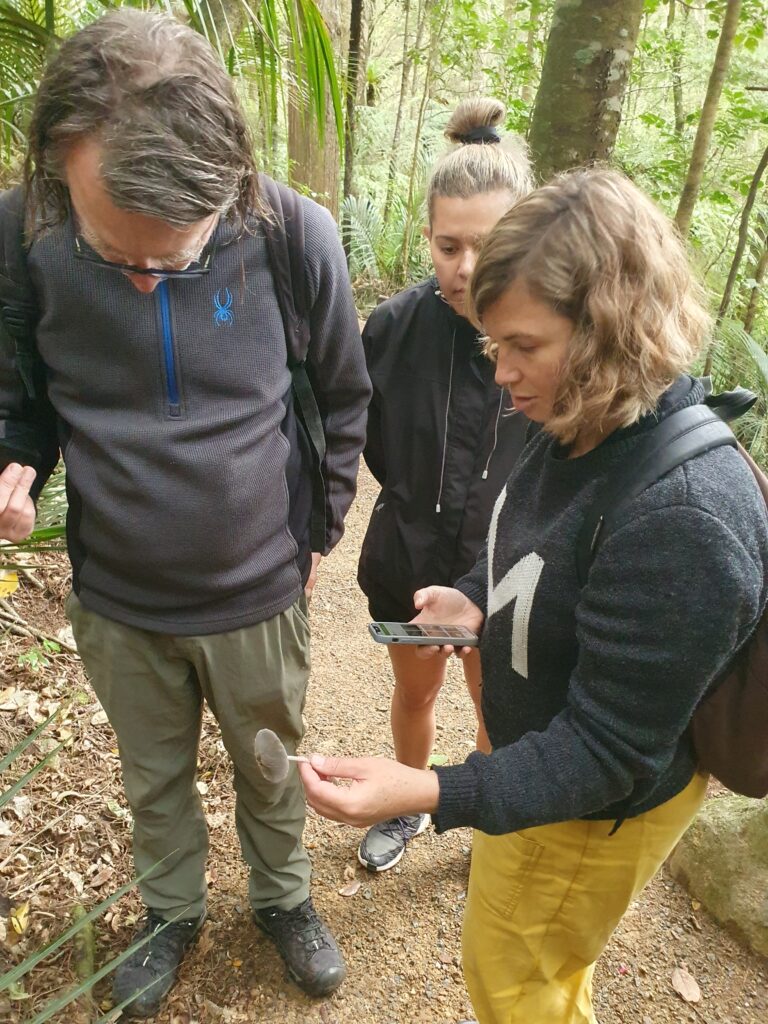
Fungi Hunting
Fungi Hunting - a super fun research expedition for the Growing Material Cultures project and part of the bigger AwhiWorld Strange Intellgences Lab project. Local expert and recent AwhiWorld interviewee, Caley McGillvery…